
A missing or faded paint label doesn’t mean your MINI’s factory color is lost. Check the other possible label locations, confirm the VIN, review available factory documents, and ask a MINI retailer or body shop for help when needed.
The goal is to identify the original color before buying touch-up paint or approving a repair. You can begin with a MINI paint code lookup by VIN, then compare the result with the vehicle’s current finish.
Key Takeaways
- A missing label does not erase the MINI’s original factory color information.
- VIN records and factory documents may confirm the original color when the sticker is gone.
- Older or repainted vehicles may still need a professional color scan for a close repair match.
Why Does a MINI Paint Code Label Become Missing or Unreadable?
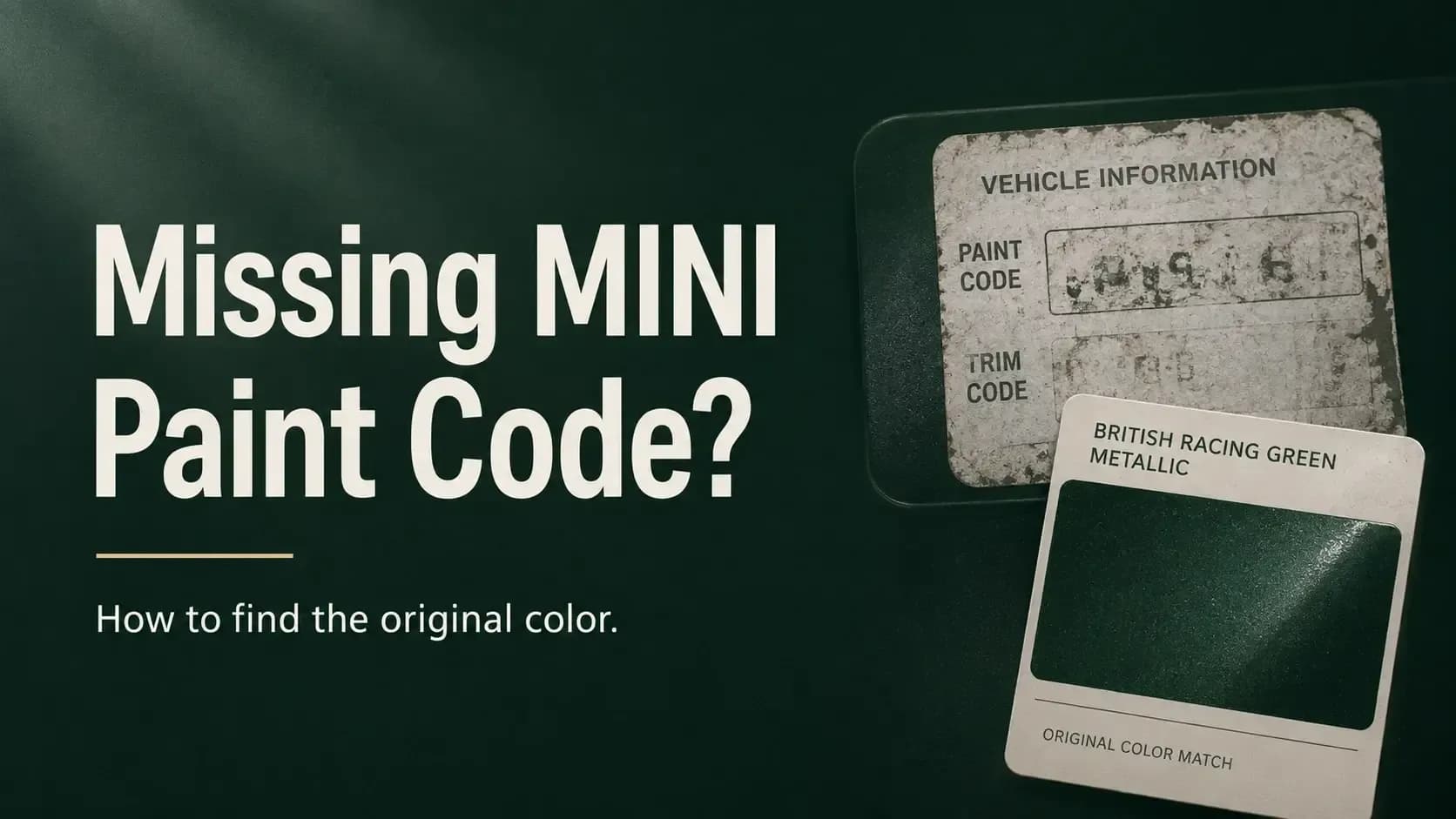
A car paint code sticker missing from an older MINI is not unusual. Labels sit in places exposed to heat, moisture, cleaning chemicals, repairs, and years of ordinary wear.
Four causes explain most missing or damaged labels:
The Label Has Faded with Age
Printed characters can fade until the code looks like a row of pale marks. Heat, moisture, sunlight, and repeated cleaning slowly weaken the ink and label surface.
A Body Repair Removed the Sticker
A replaced door, radiator support, trunk panel, or inner body section may no longer carry the original label. Repainting can also cover or destroy it.
The Label Is Dirty or Damaged
Oil, dust, adhesive residue, and scratched protective film can hide part of the code. One missing character is enough to make the result uncertain.
A Previous Owner Removed It
Restoration, repainting, wrapping, or engine-bay detailing may remove factory labels. The owner may not have realized that the sticker contained useful color information.
Where Should You Check Before Assuming the Label Is Gone?
The paint code location on a car varies by model, production year, and market. MINI labels are not always placed where owners expect, so inspect several areas before giving up.
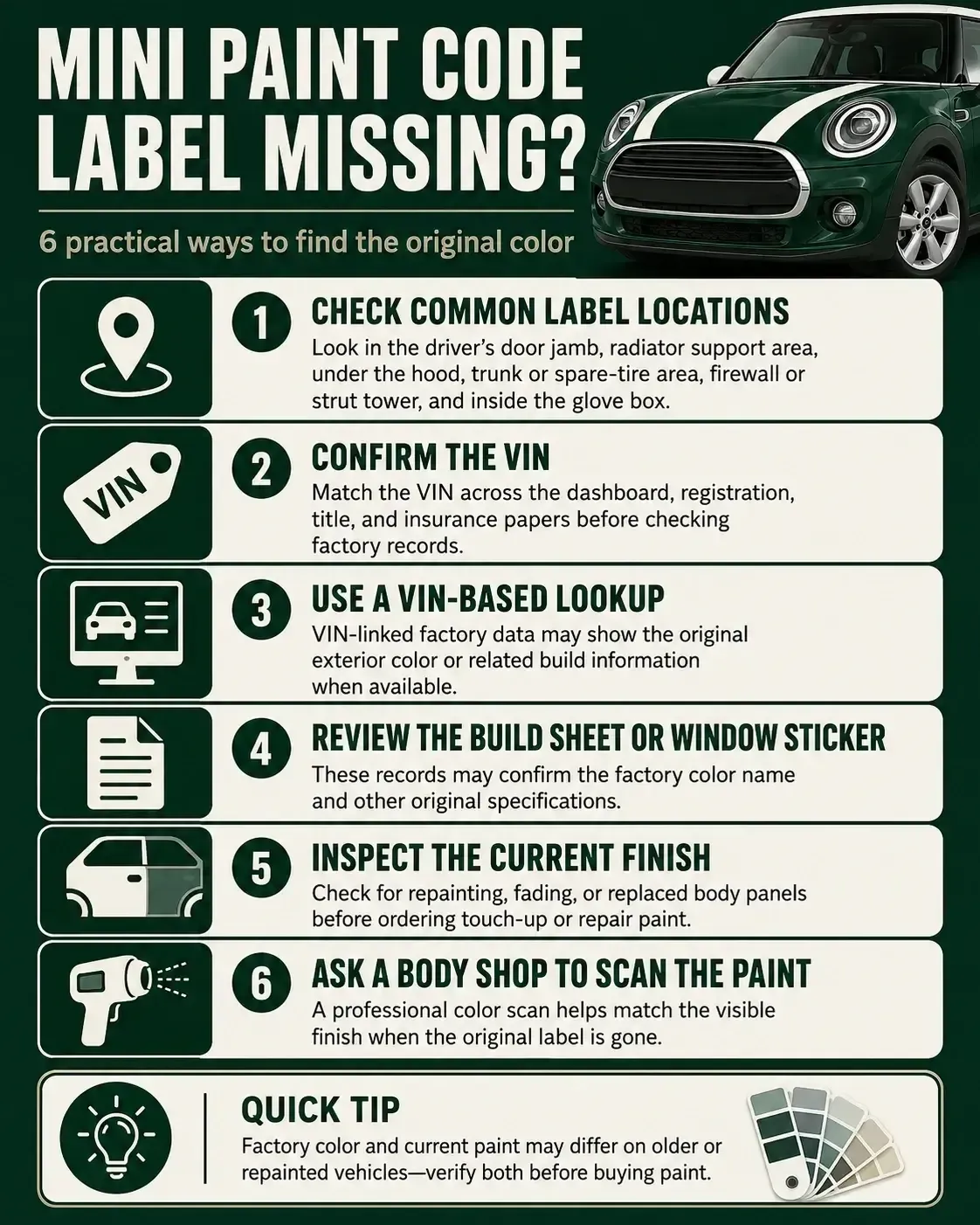
Not every MINI uses every location below, but these six places are worth checking:
Driver’s Door Jamb
Inspect the label area around the driver-side door opening and body pillar. Look closely for faded printing, torn label edges, or a sticker hidden beneath dirt.
Radiator Support Area
Open the hood and inspect the structure near the radiator support. Some production or identification labels may be attached around the front engine-bay area.
Under the Hood
Check the underside of the hood and nearby engine-compartment panels. A label may sit away from the usual door-jamb location.
Trunk or Spare-Tire Area
Lift the cargo floor and inspect the spare-tire well or storage compartment. Older vehicles sometimes retain production labels in protected rear areas.
Firewall or Strut Tower
Look around the firewall and the upper suspension mounting points. These areas may hold a label or plate linked to the vehicle’s factory configuration.
Inside the Glove Box
Inspect the glove box walls, door, and nearby trim. This location is less common, but it is protected from weather and worth a quick check.
Pro Tip: Photograph every faded label before cleaning it. Adjusting brightness and contrast on the photo may reveal characters that are difficult to see in person.
How Can You Find a MINI Paint Code Without the Label?
When the physical sticker is gone, build the answer from other evidence. Start with the VIN, then compare factory records with the color currently visible on the car.
Follow these six steps in order:
Confirm the VIN
Match all 17 VIN characters across the dashboard, door jamb, registration, title, and insurance documents. A mistyped VIN can return color details for another vehicle.
Run a VIN-Based Color Lookup
A car paint color lookup may return the factory exterior color name, code, finish, or related trim information when that data is available for the VIN.
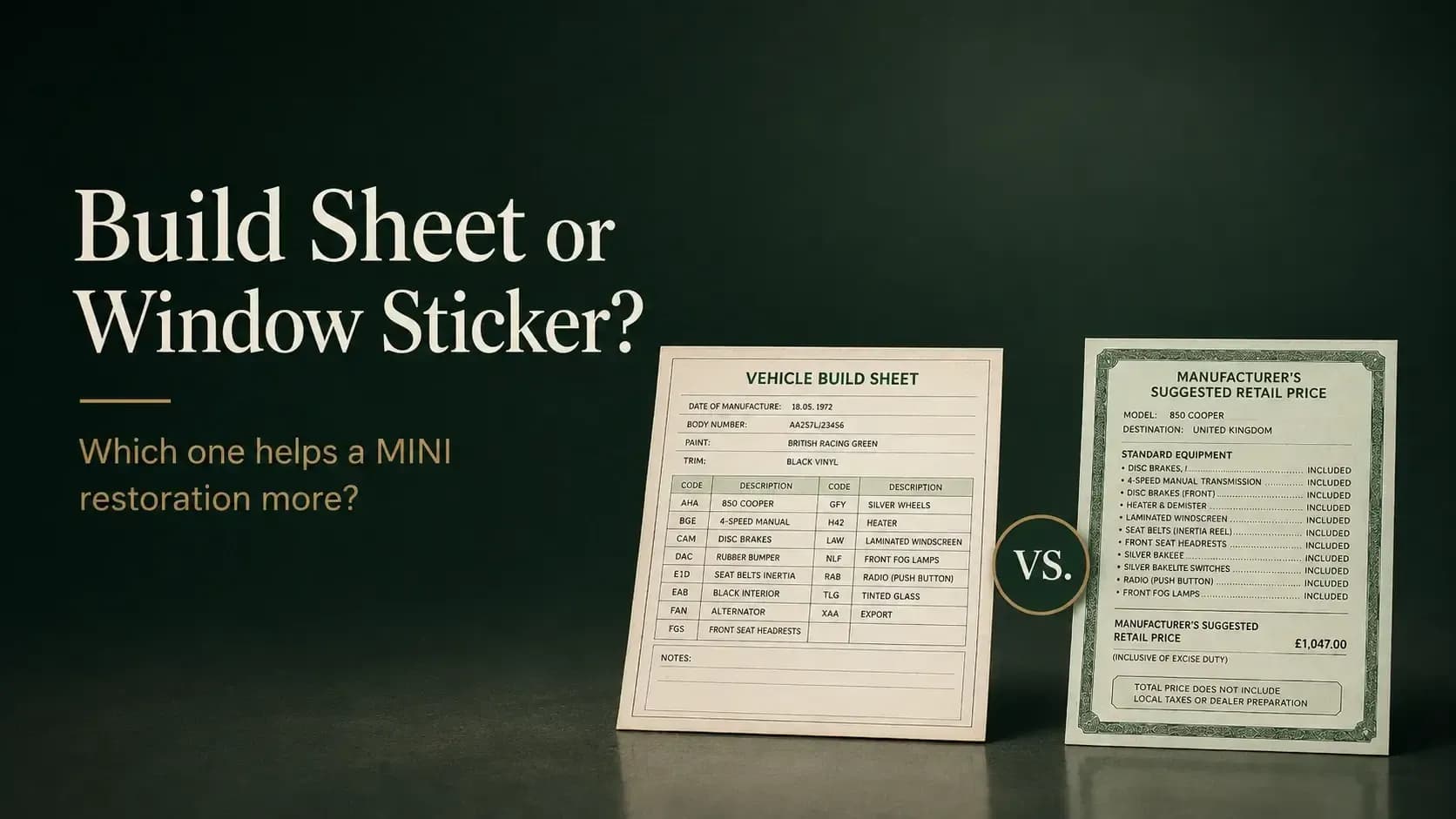
Review the Build Sheet
The build sheet may show original exterior and interior color information alongside the MINI’s factory equipment. Coverage can vary by model year and available records.
Check the Original Window Sticker
A window sticker may confirm the exterior color name and interior trim. It also helps verify that the document belongs to the correct VIN.
Ask a MINI Retailer
A MINI retailer may be able to retrieve factory color information from the VIN. Availability depends on the vehicle’s age, production market, and accessible records.
Consult a Body Shop
A qualified body shop can inspect the paint and scan its current color. This is useful when factory information exists but the finish has faded or changed.
This process answers a common question: Can a dealership tell me my paint code from my VIN? Sometimes, yes but the available detail depends on the records connected to that vehicle.
To understand why later repairs or accessories may differ from factory records, review the guide to factory-installed, dealer-installed, and aftermarket MINI options.
What Can Factory Documents Confirm About the Color?
Factory documents are useful because they establish the MINI’s original specification. They do not always describe the condition or exact appearance of the paint today.
Four pieces of information may be available:
Factory Exterior Color Name
The document may show MINI’s official name for the original exterior finish, such as Pepper White or British Racing Green.
Factory Paint Code
Some records may provide the alphanumeric code associated with the factory finish. Availability varies by vehicle, model year, and source.
Interior Color and Material
Build information may also identify the interior color, upholstery type, and trim code. This helps confirm the vehicle’s complete original color combination.
Original Equipment Context
Packages, roof colors, stripes, accent finishes, or special-edition details may explain why two similar MINIs have different factory appearances.
A factory document gives you the starting point. It does not prove that every panel still wears the original paint.
A Real MINI Example: Pepper White Confirmed by Factory Data
Consider the supplied 2015 MINI Cooper Convertible with VIN WMWZN3C53FT861789.
Its factory information identifies:
| Factory detail | Recorded information |
|---|---|
| Exterior color | Pepper White |
| Interior color | Carbon Black |
| Upholstery | SensaTec Leatherette |
| Interior trim code | 7KM |
| Paint application | Monotone |
← Scroll horizontally to see more →
Imagine that this MINI arrives at a body shop with no readable paint label. The factory record still confirms that the car originally left production in Pepper White.
That fact is valuable, but it does not finish the job. A previous owner may have repainted a door, blended a quarter panel, or changed the entire exterior. The technician should compare the record with the actual finish before mixing paint.
This is also why a used listing and the factory record may disagree. The article on why a used MINI listing may not match its window sticker explains how repainting, replacement panels, and later changes create those differences.
How Do You Match MINI Paint When the Finish Has Aged?
Knowing the original code solves only part of the problem. Paint changes as it ages, especially after years of sunlight, weather, polishing, and panel repairs.
Use these four checks before approving the final color.
✓ Inspect Several Panels
Compare the hood, doors, roof, quarter panels, and bumpers under natural light. Different shades may reveal fading, repair work, or replaced parts.
✓ Look for Repaint Evidence
Check panel edges, weather seals, bolts, trim lines, and hidden areas for overspray or color changes. These clues can reveal previous body work.
✓ Scan the Current Finish
A body shop can use a spectrophotometer or paint scanner to measure the visible color. The result can help adjust the factory formula for the aged finish.
✓ Spray a Test Card
Apply the mixed paint to a sample card before spraying the vehicle. Compare it from several angles and under indoor and outdoor lighting.
Pro Tip: Check the test card in direct sun, shade, and workshop lighting. Metallic and pearl finishes can shift noticeably as the viewing angle changes.
Color names alone are not enough. Two MINI colors may sound similar yet use different formulas, finishes, or production-era variations. This is especially important when comparing different versions of British Racing Green.
What Should You Avoid When the Paint Code Is Missing?
A rushed paint decision can turn a small chip repair into a visible patch. Avoid these four mistakes when dealing with an unreadable paint code label.
❌ Guessing from a Photograph
Phone cameras, editing, reflections, and screen settings alter color. A listing photograph cannot confirm an exact automotive paint formula.
❌ Buying by Color Name Alone
“White,” “black,” or “British Racing Green” is too broad. Manufacturers may use several formulas and generations under similar names.
❌ Assuming Every Panel Is Original
A door, hood, bumper, or fender may have been replaced or repainted. Match factory information against the whole vehicle, not one panel.
❌ Ordering Paint Before Verification
Do not buy a large quantity based on an uncertain code. Confirm the VIN, color record, current finish, and test result first.
Conclusion: Recover the Factory Color, Then Match the Car You Have
A missing car paint code is inconvenient, but it rarely leaves you with no options. Check every likely label location, confirm the VIN, review factory documents, and contact a MINI retailer when records may still be available.
Then inspect the car itself. The original color tells you how the MINI left the factory; a professional scan helps account for fading, previous repairs, and the finish visible today. You often need both pieces of information for a convincing repair.
That is the safest way to find a paint code without the label and avoid an obvious mismatch. Before ordering touch-up paint or approving body work, check the MINI’s factory paint information by VIN.