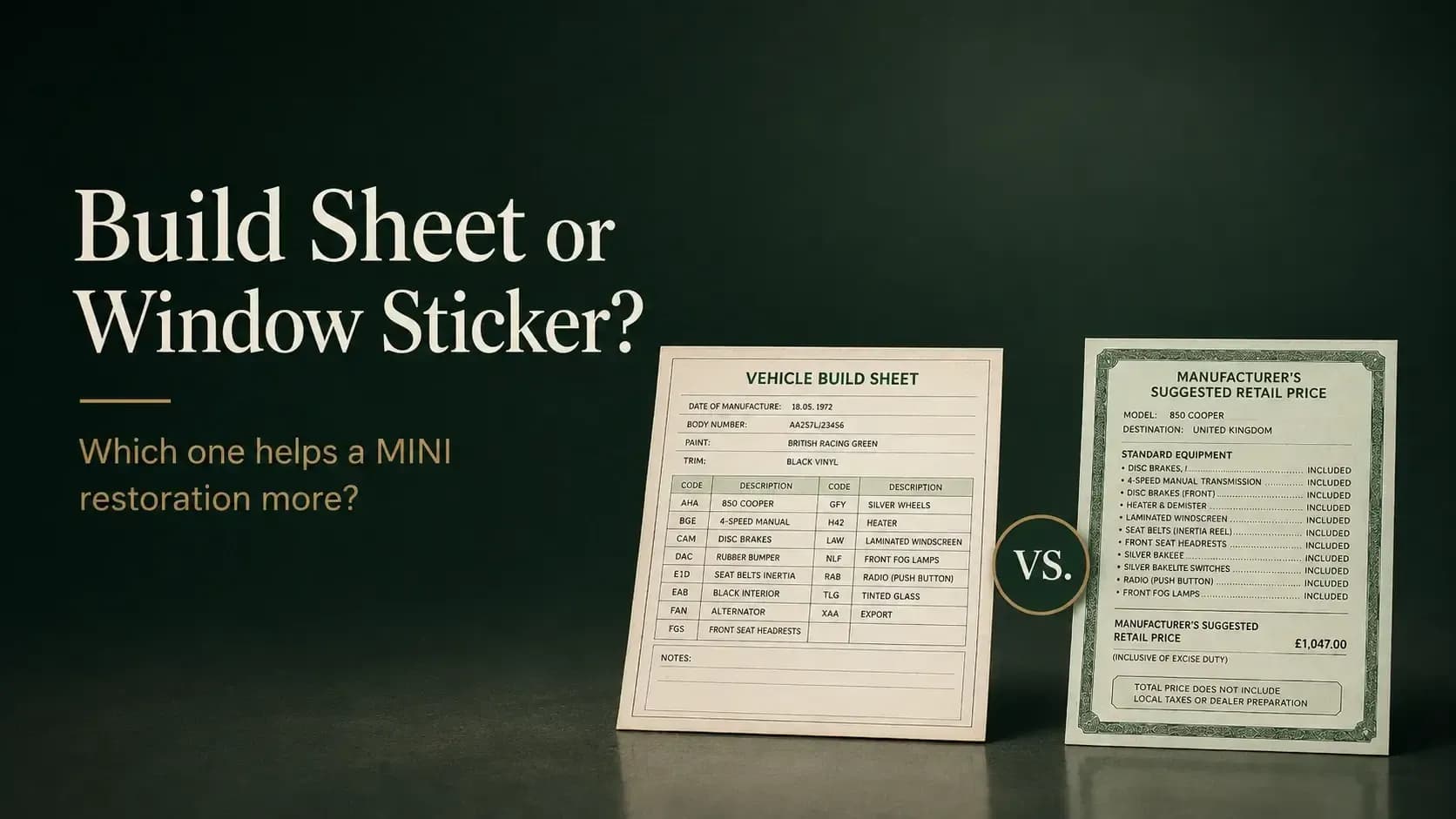

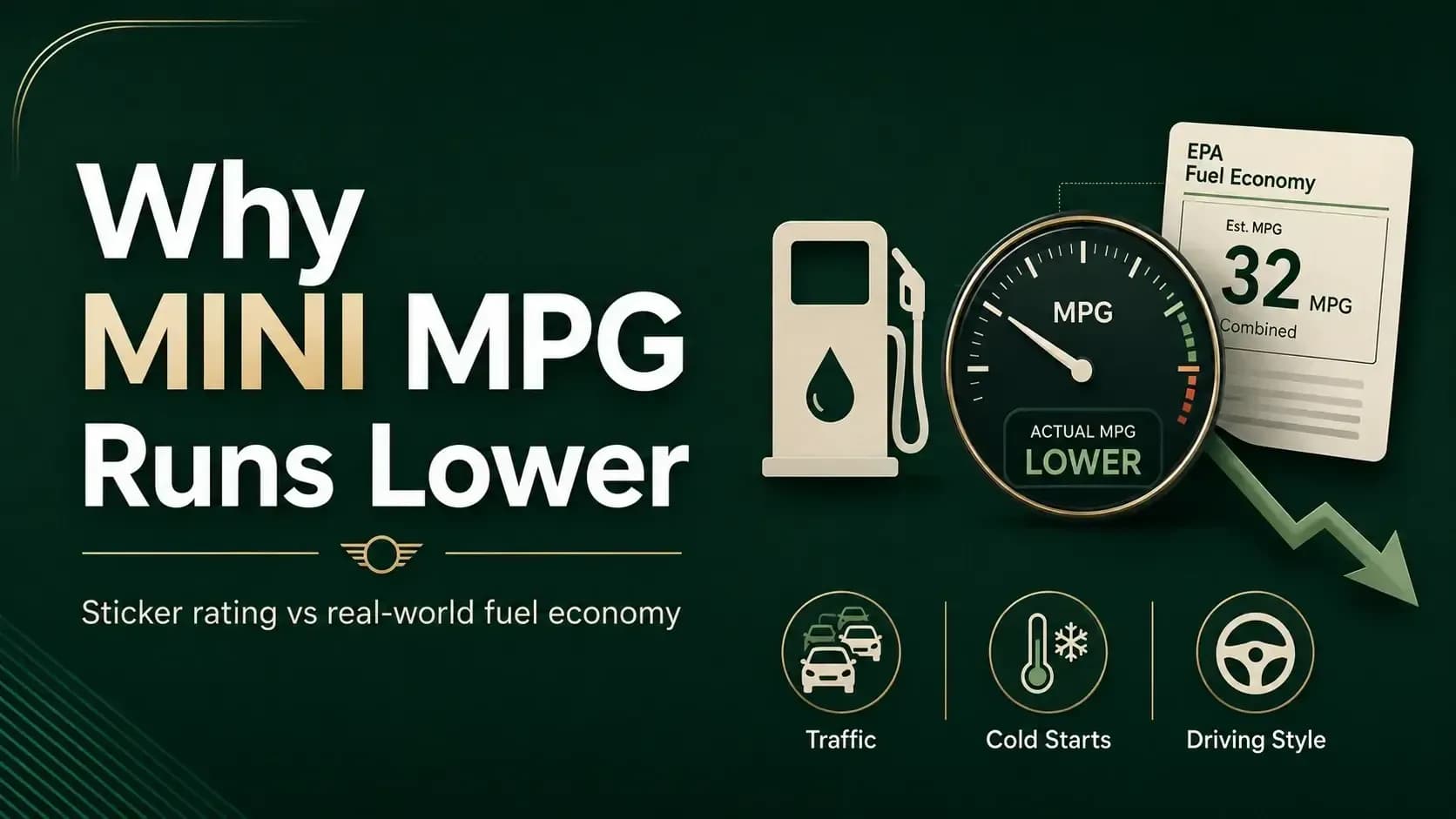
Your MINI’s window-sticker MPG is a standardized estimate, not a promise for every commute. Short trips, traffic, highway speed, weather, tire condition, and driving style can all pull real-world fuel economy below the label.
Start by checking the correct factory figures through a MINI fuel-economy lookup by VIN. Then measure several full tanks before deciding whether the difference is normal or worth investigating.
Key Takeaways
- EPA ratings are controlled comparison figures based on standardized testing, not guaranteed personal results.
- Short trips, aggressive acceleration, high speed, weather, tires, and vehicle condition can lower real-world MPG.
- A sudden, persistent decline matters more than one disappointing tank.
What Does the MPG on a MINI Window Sticker Actually Mean?
The MPG printed on a window sticker estimates how a new vehicle should perform under standardized conditions. Its main value is consistency: every vehicle is tested using the same framework, so shoppers can compare one model with another fairly.
Four details make the label easier to understand.
It Is a Comparison Tool
EPA describes the label as a common yardstick for comparing vehicles. Your mileage may differ, but the controlled method makes the figures useful when comparing a MINI Cooper with another trim, transmission, or competing car.
It Comes From Laboratory Testing
Vehicles are tested on a dynamometer, which works rather like a treadmill for cars. The driver follows fixed speed and acceleration schedules while fuel use and emissions are measured under controlled conditions.
The Test Covers More Than Gentle Driving
Current label methods account for five broad conditions: city driving, highway driving, aggressive or higher-speed driving, hot-weather air-conditioning use, and cold operation. The results are combined and adjusted to create the official city, highway, and combined values.
It Represents an Average Driver
The test cannot recreate your exact hills, traffic queues, trip length, passengers, tires, climate, or right foot. EPA therefore presents the figures as national-average estimates rather than a guarantee for every driver.
So, window sticker MPG vs actual MPG is not really “official truth versus wrong car.” It is a controlled estimate versus your own operating conditions.
The guide to reading a MINI window sticker section by section explains where to find the combined, city, highway, and fuel-cost figures.
Why Is Your MINI’s Actual MPG Lower Than the Window Sticker Rating?
A MINI can fall below its EPA estimate without having a mechanical fault. Usually, several small penalties stack together—five minutes of idling here, a short cold trip there, a bit of enthusiastic acceleration because, well, it’s a MINI.
Eight factors explain most gaps between EPA vs real-world MPG.
Most of Your Trips Are Short
A cold engine and transmission need time to reach efficient operating temperatures. If the journey ends after three or four miles, much of it happens during warm-up.
This is especially noticeable for owners who use their MINI for school runs, local errands, or short urban commutes.
You Drive in Stop-and-Go Traffic
Repeated acceleration uses more fuel than maintaining a steady pace. Braking then throws away much of the energy used to build speed.
EPA’s city cycle represents urban operation, but your daily queue may be slower, denser, steeper, or more chaotic than the standardized pattern. The label cannot reproduce every rush-hour crawl.
You Enjoy the Accelerator
A Cooper S or John Cooper Works can make gentle driving feel like a missed opportunity. Still, rapid acceleration and hard braking increase fuel consumption.
EPA specifically includes a more aggressive, higher-speed test because driving behavior has a meaningful effect on MPG.
Your Highway Speed Is Higher Than the Test Pattern
“Highway MPG” does not mean the car will achieve that figure at every motorway speed. Aerodynamic drag rises as speed increases, so cruising well above the test pattern usually consumes more fuel.
A MINI’s upright windscreen, wide performance tires, roof accessories, and open convertible roof can add to that penalty.
The Weather and Climate Control Are Working Against You
Cold temperatures increase warm-up time, while hot weather can require heavy air-conditioning use. Defrosters, heated accessories, and cooling systems also add load.
EPA includes hot and cold cycles in its method, but your local climate or trip pattern may be more demanding than the national-average assumptions.
Tire Pressure, Size, or Type Has Changed
Underinflated tires increase rolling resistance. Wider aftermarket wheels, heavier rims, winter tires, and aggressive performance compounds may also change fuel economy from the original configuration.
EPA advises drivers to maintain the manufacturer’s recommended tire pressure because underinflation reduces fuel economy and increases tire wear.
The Car Carries More Weight or Drag
Passengers, luggage, roof boxes, bike racks, and unnecessary cargo make the engine work harder. A roof rack can keep affecting airflow even when it carries nothing.
One item may barely move the needle. Several together can turn a small gap into a noticeable one.
Maintenance or Vehicle Condition Has Slipped
Incorrect tire pressure, overdue servicing, unsuitable oil, dragging brakes, poor wheel alignment, worn ignition parts, or a fault stored in the engine-management system can reduce efficiency.
EPA recommends following the manufacturer’s maintenance schedule, using the specified motor-oil grade, and keeping the vehicle properly tuned.
The important word is persistent. One low tank after heavy traffic proves very little. A steady decline under similar conditions deserves a closer look.
How Can You Measure Your MINI’s Real Fuel Economy Accurately?

Use the same method for several tanks. The dashboard display is helpful for trends, but fuel receipts and distance traveled give you a clearer long-term picture.
Fill the Tank
Stop at the first automatic pump shutoff and avoid repeatedly topping up.
Reset the Trip Meter
Record the odometer or reset one trip counter before leaving the station.
Drive Normally
Use the MINI as you usually do rather than changing your habits for one “perfect” tank.
Refill Consistently
Return to the same pump when practical and stop at the first automatic shutoff again.
Calculate the MPG
Divide miles driven by gallons added: miles ÷ gallons = MPG.
Average Several Tanks
Track at least three to five complete tanks so traffic, weather, and filling variation do not control the result.
Pro Tip: Note the temperature, trip type, tire pressure, and unusual driving for each tank. A simple log often reveals the cause faster than staring at one MPG number.
What Does a Real MINI Window-Sticker Example Show?
The supplied 2015 MINI Cooper Convertible sample is rated at:
| Rating type | Window-sticker value |
|---|---|
| City | 26 MPG |
| Highway | 34 MPG |
| Combined | 29 MPG |
← Scroll horizontally to see more →
Suppose an owner records 24 MPG over several tanks. That does not automatically mean the label is inaccurate.
A convertible used for short urban trips, driven with the roof open, fitted with run-flat tires, and caught in heavy traffic lives a different life from the standardized test car. Those conditions can collectively explain much of the gap.
Now imagine the same MINI returns 30 or 31 MPG during a long, steady road trip. That change suggests the vehicle itself may be fine; the low everyday figure is tied mainly to route and use.
This is why real-world MPG vs EPA rating should be judged over time and by driving pattern, not by one isolated number.
When Is Lower MPG Normal, and When Is It a Warning Sign?
Normal variation tends to follow a clear pattern. A possible fault often creates a sudden change, remains present, or appears with other symptoms.
Four signs help separate the two.
Normal: The MPG Changes With the Route
Lower city economy and better results on a steady motorway trip usually point to normal operating differences.
Short trips, hills, congestion, and frequent stops can create a repeatable gap without indicating damage.
Normal: The MPG Moves With the Seasons
A drop during colder months or periods of heavy air-conditioning use may follow weather and accessory demand.
Compare the current result with the same season last year rather than with your best-ever summer road trip.
Concerning: The MPG Falls Suddenly
A sharp decline with no change in route, weather, tires, fuel, or driving style deserves attention.
Check basic items first: tire pressure, warning lights, fluid levels, service status, and whether a brake or wheel feels unusually hot after driving.
Concerning: Other Symptoms Appear
Rough running, hesitation, fuel odor, smoke, a warning light, poor starting, or loss of power can point beyond normal fuel-economy testing limitations.
At that stage, guessing becomes expensive. Have the MINI inspected and the fault memory checked.
What Should Used-MINI Buyers and Car Flippers Check?
A seller saying “it gets bad gas mileage” may be describing traffic, not a failing engine. The opposite is also true: an optimistic dashboard screenshot can hide a car that has only been driven gently for ten miles.
Use four checks before judging the vehicle:
✓ Compare the Correct Factory Rating
Match the VIN, model year, engine, transmission, body style, and drivetrain with the correct label figure.
A Cooper, Cooper S, JCW, Convertible, Clubman, and Countryman should not be compared using one generic “MINI MPG” number.
✓ Review the Owner’s Driving Pattern
Ask whether the car mainly handles short trips, dense traffic, motorway driving, or long rural journeys.
A low average makes more sense when you know how the miles were accumulated.
✓ Inspect Tires and Modifications
Check tire pressure, size, tread type, wheel weight, roof accessories, and performance modifications.
A car may look factory-standard in photographs while wearing wider tires or heavier wheels that alter its real-world economy.
✓ Look for a Sudden Change
Service receipts and fuel records are more useful than one dashboard display. A long, stable history followed by a sudden MPG drop may justify further diagnosis.
When factory information and the seller’s description disagree, see why a used MINI listing may not match its original window sticker.
What Can Bring Your MINI’s MPG Closer to the Rating?
You do not need to crawl away from every traffic light or strip the personality from the car. Small, consistent changes usually matter more than one dramatic “fuel-saving” trick.
Four areas are worth addressing.
Smooth Out Acceleration
Build speed progressively and look farther ahead so you can lift off earlier instead of braking hard.
The goal is not painfully slow acceleration. It is avoiding repeated bursts of throttle followed by wasted braking.
Combine Short Journeys
One longer outing usually gives the engine more time at operating temperature than several separate cold starts.
Grouping errands also reduces the time spent idling, parking, and warming the drivetrain repeatedly.
Restore the Factory Baseline
Set cold tire pressures to the vehicle placard, remove unused roof accessories, clear unnecessary cargo, and confirm that the installed tire size is appropriate.
These checks are cheap, quick, and often overlooked.
Keep Maintenance Current
Follow the correct service schedule, oil specification, and diagnostic process. Do not replace parts at random because the MPG display looks disappointing.
A targeted inspection is more useful than a boot full of “fuel saver” products.
Pro Tip: Change one variable at a time. Correct the tire pressure, then track two tanks. Removing five possible causes at once makes it harder to learn which one mattered.
Are Window-Sticker MPG Ratings Accurate?
They are accurate for their intended purpose: standardized vehicle comparison and a reasonable estimate for average driving. They are not precise forecasts for every person, route, season, or vehicle condition.
EPA uses controlled and repeatable procedures, periodically updates its methods, audits manufacturer submissions, and independently confirms a portion of test results. Manufacturers must also revise labels when evidence shows that published figures are too high.
So the fair answer to how accurate are car window sticker MPG ratings is: useful and carefully controlled, but personal results will vary.
Think of the label like a standardized lap time set under defined conditions. It tells you how cars compare. It cannot predict rain, traffic, luggage, tires, altitude, or the driver’s mood on Tuesday morning.
Conclusion: Treat the Sticker as a Baseline, Not a Promise
A MINI’s actual MPG can fall below its window-sticker rating without anything being wrong. EPA estimates reflect standardized national-average conditions, while your fuel economy reflects your actual roads, trip length, speed, climate, tires, maintenance, and driving style.
First, confirm that you are comparing the car with the correct rating. Then calculate MPG over several complete tanks and look for patterns.
A stable gap linked to short trips or traffic is usually understandable. A sudden decline, especially with warning lights or drivability symptoms, deserves inspection.
To establish the correct baseline, check your MINI’s original fuel-economy rating by VIN. Once you know the right number, Actual MPG vs window sticker becomes a useful diagnostic comparison rather than a frustrating guessing game.