
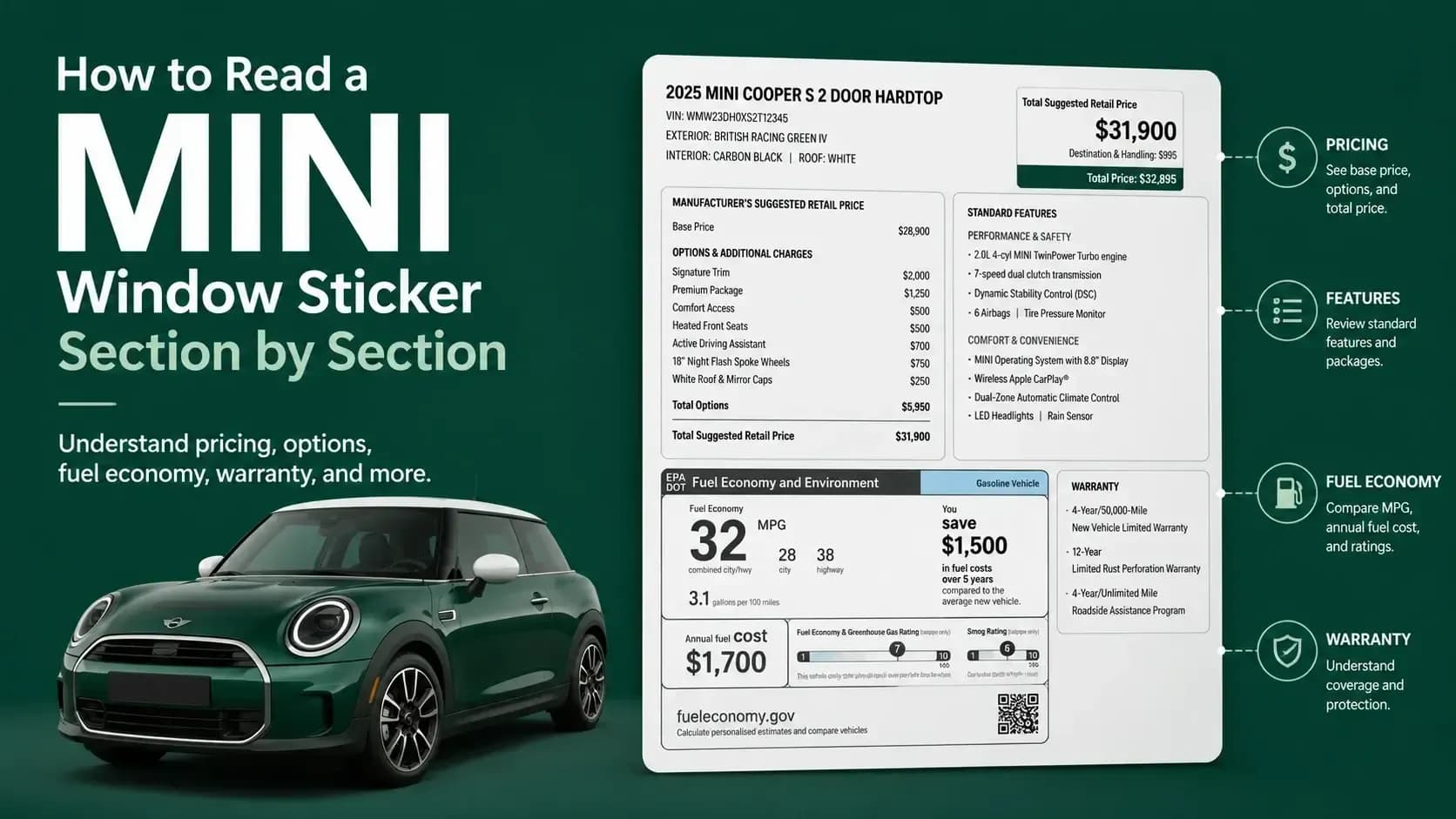
Learning how to read a car window sticker is easier than it first appears. Start with the vehicle description, then work through standard equipment, paid options, pricing, fuel economy, warranty, and safety information.
The sticker won’t tell you everything that happened to a used MINI. It will, however, show how the car was originally built and priced. Need the document before following along? You can get a MINI Cooper window sticker by VIN and use this guide as you read it.
Key Takeaways
- Confirm the VIN, model, colors, engine, and transmission before checking prices.
- Separate standard equipment from paid packages and later modifications.
- Use MPG, warranty, and safety details as original reference information, not promises about the car today.
What Should You Check First on a MINI Window Sticker?
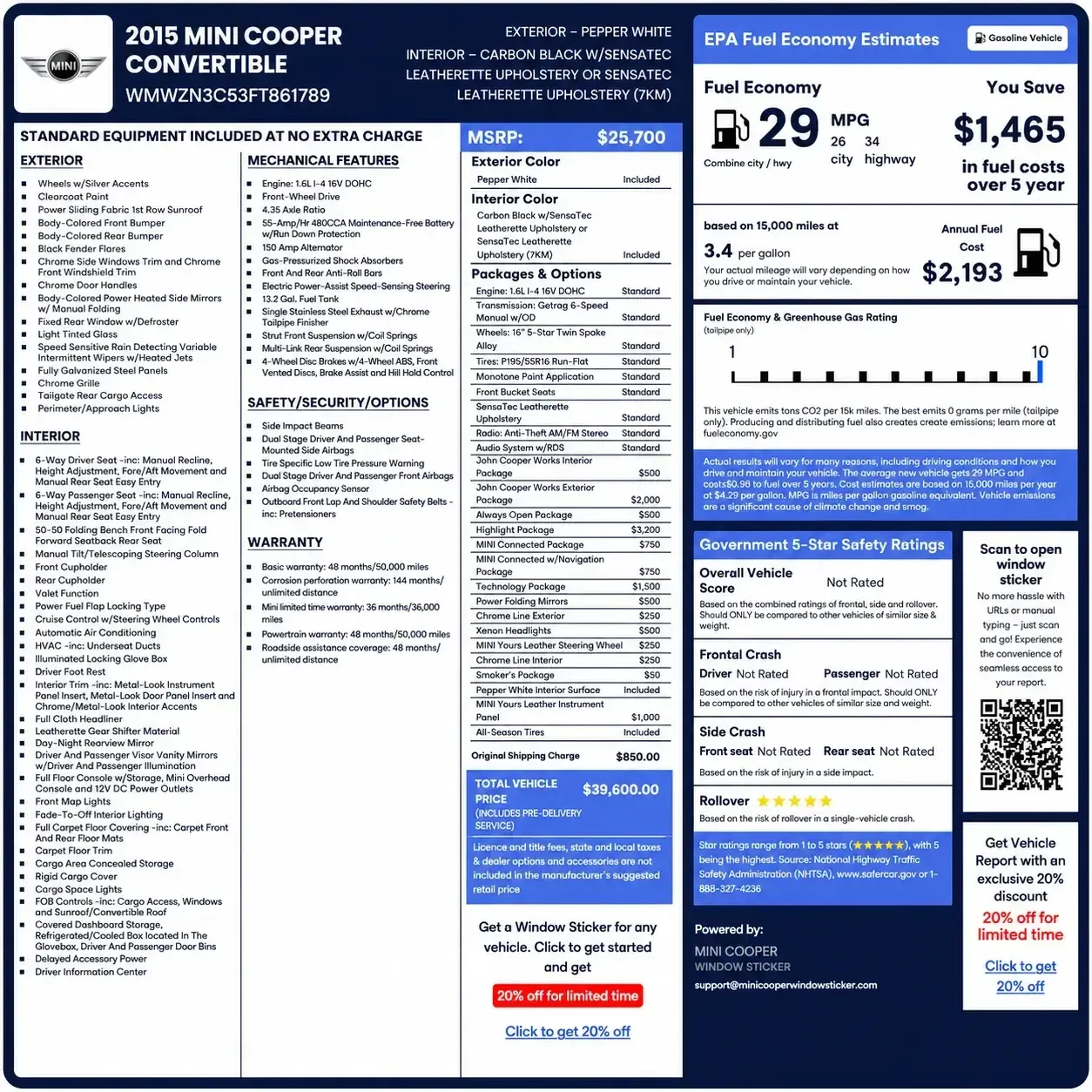
The first part of the sticker confirms which vehicle the document belongs to. Check this area before comparing options or prices because one incorrect VIN character could mean you’re reading information for a completely different MINI.
Model Year, Model, and Body Style
Start by providing the model year along with a complete vehicle description. There could be a lot of differences in the equipment list and original price despite the MINI Cooper having the same appearance for the Convertible, Hardtop, Clubman, and Countryman models.
Avoid buying one that just specifies "MINI Cooper." The actual model and body style provide context to the other data on the sticker.
Vehicle Identification Number
Check the VIN number on the sticker against those in the following places: Dashboard
The characters should match exactly. A typo may produce the wrong trim, engine, package list, or color information. It sounds basic, yet this is one of the easiest mistakes to miss when shopping online.
Exterior and Interior Colors
The sticker may show the original exterior color, interior color, upholstery, and trim information. These details help when a car has been repainted, reupholstered, or described vaguely by a seller.
The supplied 2015 MINI Cooper Convertible sample lists Pepper White exterior paint and Carbon Black SensaTec Leatherette Upholstery with trim code 7KM. That’s far more useful than “white with black seats.”
Engine, Transmission, Wheels, and Tires
Confirm the mechanical configuration before comparing the car with another listing. These details influence driving feel, maintenance costs, fuel economy, and buyer demand.
The sample MINI came with a 1.6L four-cylinder engine, a Getrag six-speed manual transmission, 16-inch alloy wheels, and P195/55R16 run-flat tires.
How Do Standard Equipment and Paid Options Differ?
A useful car window sticker breakdown separates features included in the base price from equipment the original buyer paid extra to add. This section often explains why two similar-looking MINIs had very different prices when new.
Standard Equipment
Standard equipment comes with the base vehicle at no extra charge. It may include air conditioning, cruise control, airbags, braking systems, suspension components, storage features, and the original audio system.
These features still matter. They simply don’t appear as separate charges in the price calculation.
Factory Packages
Packages combine several related features under one name and price. MINI has used many appearance, comfort, technology, and performance packages over the years.
The 2015 Convertible sample includes the Highgate Package, Sport Package, Technology Package, and John Cooper Works packages. Each package adds a distinct part of the car’s factory identity.
Individual Factory Options
Sometimes, certain upgrades do not come under a package but come as separate items. They might include lighting, mirrors, trimming, leather interiors, or sound system.
The list of some of the upgrades found in the sample includes Xenon Headlights, Power Folding Mirrors, Chrome Line Exterior, Chrome Line Interior, and MINI Yours Leather Instrument Panel.
Dealer-Installed and Aftermarket Equipment
Not every feature currently fitted to the car came from the factory. Wheels, stripes, mirror caps, spoilers, audio systems, and suspension parts may have been installed later.
The guide to factory-installed, dealer-installed, and aftermarket MINI options explains how to separate original equipment from later additions.
How Should You Read the Price Section?
The pricing area shows how the vehicle moved from its starting MSRP to its final factory price. For buyers and flippers, this is one of the most useful parts of a car window sticker.
Read each line in order. The total makes more sense once you know which charges belong to the base vehicle, factory options, and shipping.
Base MSRP
The base MSRP is the starting manufacturer’s suggested retail price before paid options and destination charges.
For the 2015 MINI Cooper Convertible sample, the base MSRP was $25,700. That number represents the starting configuration, not the final price of this particular vehicle.
Package and Option Prices
Paid equipment appears as separate charges or grouped package prices. This is where the original buyer’s preferences begin to shape the final total.
The sample includes a $3,000 Highgate Package, a $2,000 John Cooper Works Exterior Package, a $1,500 Technology Package, and a $1,250 Sport Package.
Destination Charge
The destination or shipping charge covers delivery from the manufacturer to the selling dealer. It is generally part of the factory price rather than an optional upgrade.
The sample sticker lists an original shipping charge of $850. This should not be confused with taxes, title fees, registration, or dealer-added products.
Total Vehicle Price
The total vehicle price combines the base MSRP, paid factory equipment, packages, and destination charge.
The sample reached $39,600—$13,900 above the base MSRP. That gap shows why two MINIs from the same model year may have started life at very different price points.
What Does the Fuel Economy Section Really Tell You?
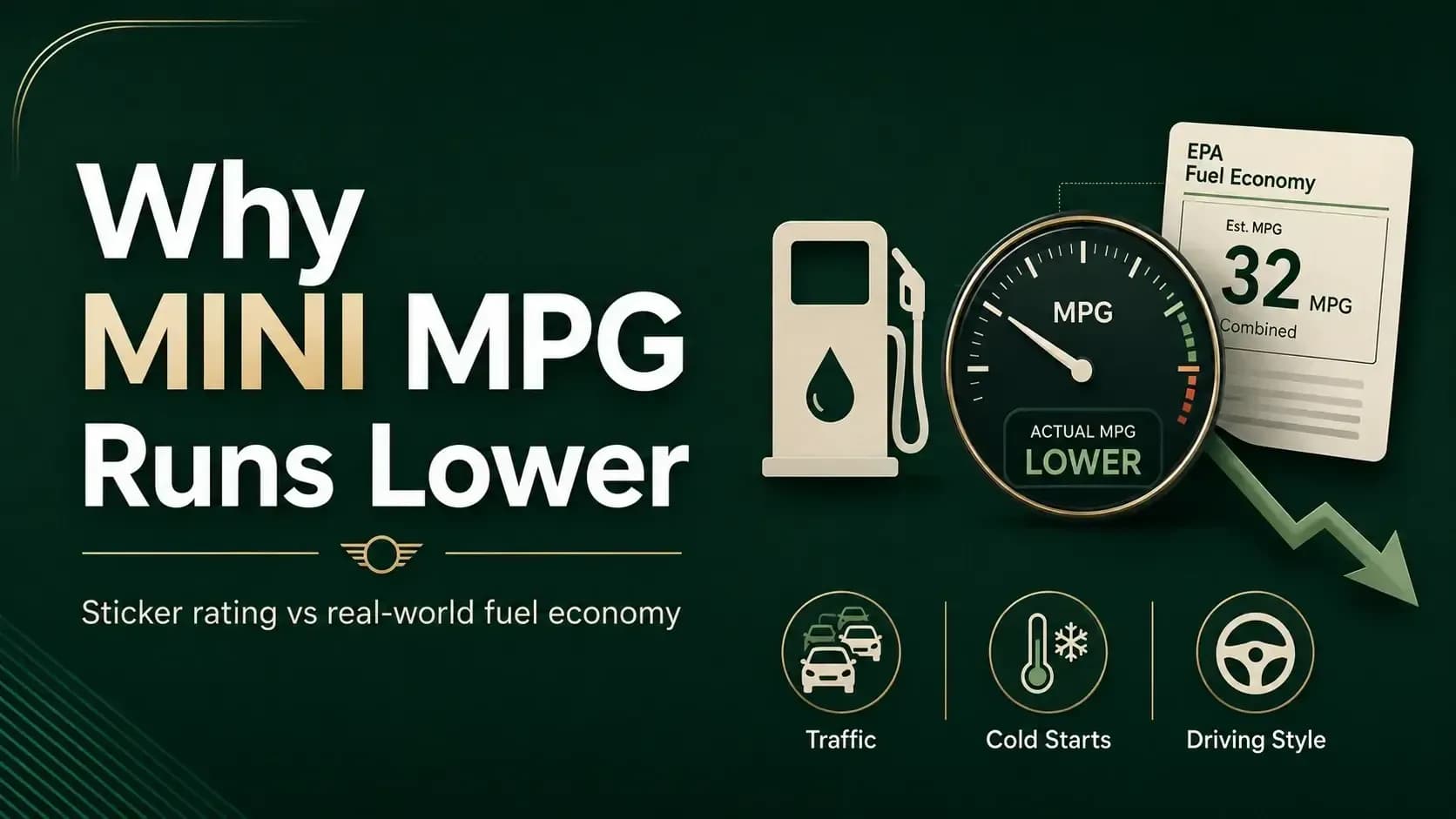
A clear window sticker explaining the guide should put the fuel section into context. MPG figures are useful for comparison, but they cannot predict the exact mileage every owner will achieve.
Driving style, traffic, weather, tires, and maintenance all affect real-world fuel use.
City MPG
City MPG estimates fuel use during slower, stop-and-go driving. Frequent braking, short trips, and repeated acceleration usually lower fuel economy.
The sample MINI is rated at 26 MPG city. A driver dealing with short winter journeys or heavy traffic may see a lower number.
Highway MPG
Highway MPG estimates fuel economy during steadier travel at higher speeds. It is often higher because the engine isn’t constantly accelerating from a stop.
The sample shows 34 MPG highway. Speed, hills, wind, tire pressure, and cargo can still change the actual result.
Combined MPG
Combined MPG blends estimated city and highway driving into one comparison figure.
The sample lists 29 MPG combined. Think of this as a reference point rather than a guarantee. Your daily route may not match the driving pattern used for the label estimate.
Annual Fuel Cost
The sticker may also show estimated annual fuel cost and a five-year comparison. These figures rely on assumed fuel prices and yearly mileage.
The sample lists an estimated annual fuel cost of $2,193. The article on why a MINI’s actual MPG may be lower than the sticker rating explains the most common differences.
What Do the Warranty and Safety Sections Mean?
These sections show original coverage terms and available safety-label information from when the MINI was new. They are useful records, but they don’t automatically confirm what remains active today.
Read the time and mileage limits carefully, especially when checking an older used car.
Basic and Powertrain Warranty
The basic warranty generally covers eligible factory defects, while the powertrain warranty focuses on major drivetrain components.
The sample lists 48 months or 50,000 miles for both. Those were the original terms, not confirmation that the vehicle is still under warranty.
Maintenance and Roadside Assistance
Some MINI stickers include original maintenance coverage and roadside assistance details.
The sample lists 36 months or 36,000 miles for maintenance and 48 months with unlimited distance for roadside assistance. Transfer and eligibility conditions may vary.
Corrosion Perforation Coverage
The sample shows corrosion perforation coverage for 144 months with unlimited mileage.
This normally refers to qualifying rust-through conditions. It should not be read as coverage for every paint chip, scratch, surface-rust spot, or cosmetic issue.
Government Safety Ratings
The safety section may show overall, frontal, side, and rollover ratings when available.
Some categories on the sample are marked “Not Rated.” That does not automatically mean the car is unsafe; it means the label does not display a rating for that category.
What Common Window Sticker Mistakes Should You Avoid?

Once you understand the main sections, the sticker becomes easier to scan. Still, a few mistakes can create false confidence when assessing a used MINI.
These four checks help keep the document in perspective.
⚠️ Treating Original MSRP as Current Value
Original MSRP shows what the vehicle cost when new. It does not determine today’s selling price.
Mileage, condition, service records, accident history, modifications, and local demand now have a much larger influence on market value.
⚠️ Assuming Every Current Feature Is Original
A MINI may wear newer wheels, stripes, lights, trim, or audio equipment that did not come from the factory.
Check the sticker before calling a feature original. Later additions can still be desirable, but they should be described accurately.
⚠️ Reading MPG as a Promise
Fuel economy ratings provide a standard comparison between vehicles. They do not guarantee that every driver will achieve the same result.
A short urban commute and a long highway journey place very different demands on the car.
⚠️ Ignoring a Mismatch
Pause if the VIN, trim, color, engine, or factory options don’t match the vehicle or seller’s description.
The listing may contain an honest mistake, the vehicle may have been modified, or the sticker may belong to another car.
The guide on why a used MINI listing may not match its original window sticker covers the next checks.
Read the Sticker as the MINI’s Factory Story
That’s how to read a new car window sticker section by section without getting buried in small print. Confirm the vehicle first, separate standard features from paid extras, follow the pricing calculation, and then review fuel economy, warranty, and safety details.
For used-car buyers, enthusiasts, and flippers, understanding a vehicle window sticker gives you a cleaner starting point. It helps confirm what the MINI was supposed to be when it left the factory.
It won’t reveal every repair, accident, or previous owner. That information belongs elsewhere. But when you need original colors, equipment, packages, and pricing, the sticker tells a valuable part of the story.
Ready to examine your own MINI? Get the MINI window sticker and read it section by section.
Frequently Asked Questions
Is a MINI window sticker the same as a build sheet?
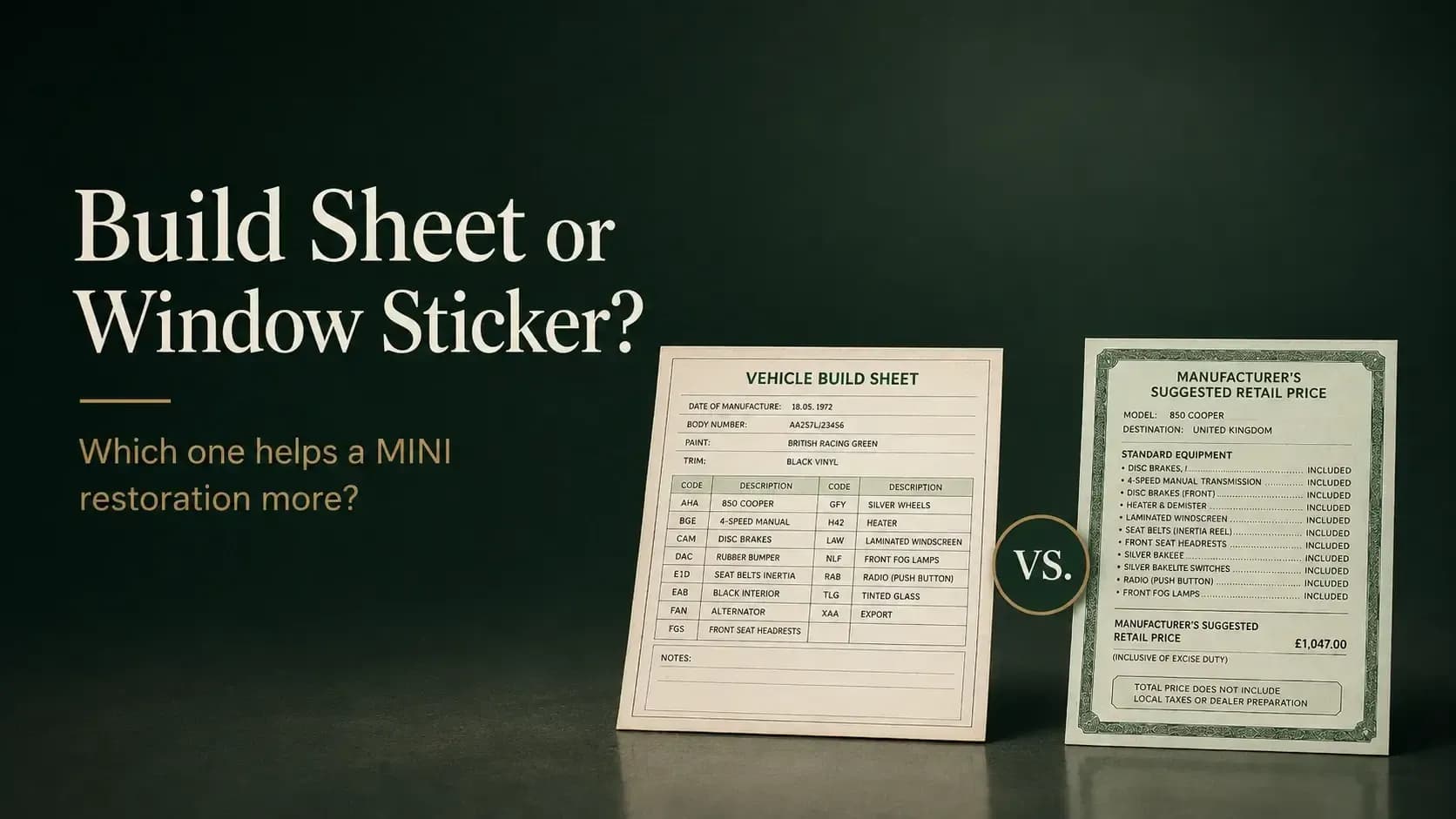
No. A window sticker focuses on original pricing, standard equipment, paid options, fuel economy, warranty, and label information. A build sheet focuses more closely on factory configuration and installed equipment.
Does the total vehicle price include taxes and dealer fees?
Usually not. The sticker total generally includes the base MSRP, factory options, packages, and destination charge. Taxes, registration, title fees, and dealer-added products are normally separate.
Can a window sticker confirm the original MINI paint color?
Yes, when color information is available. The sticker may show the original exterior and interior color names, while factory build information may provide more detailed trim or paint data.
Does a MINI window sticker show accident history?
No. Accident records, title information, ownership history, mileage events, and liens belong in a vehicle history report rather than a factory window sticker.
Can I use a window sticker to compare used MINI listings?
Yes. It can help you compare original equipment, packages, colors, and MSRP. You should still consider mileage, condition, service records, modifications, and vehicle history.