
A MINI can wear factory packages, dealer accessories, and owner-added parts at the same time. That mix is common and it can make a used-car listing surprisingly hard to verify.
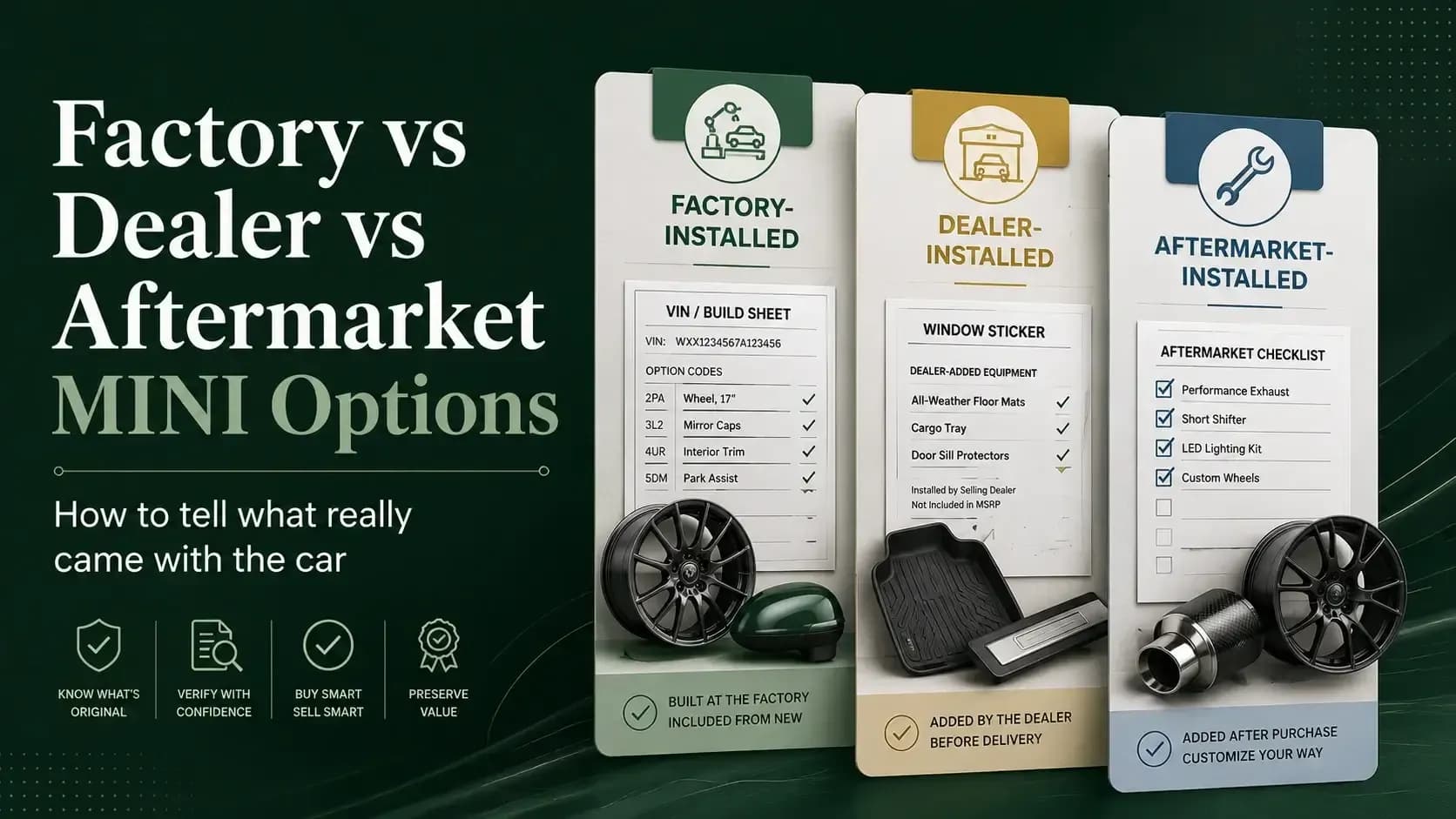
The main difference is simple: factory options are installed as part of the original build, dealer accessories are usually added before or around the first sale, and aftermarket parts are fitted later by an owner or independent shop.
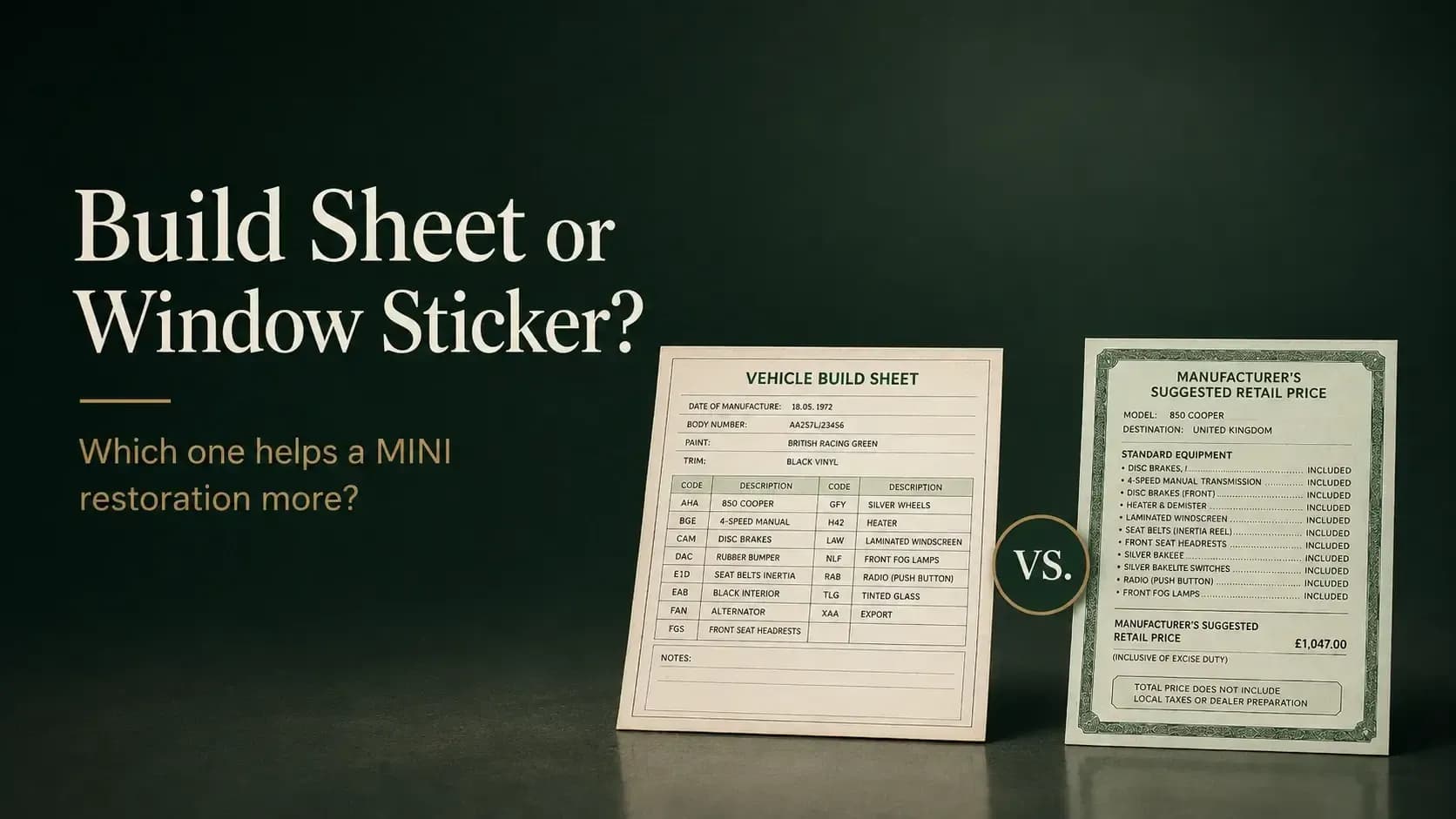
To establish the factory starting point, begin with the MINI build sheet by VIN, then compare it with the window sticker, invoices, and the car in front of you.
Key Takeaways
- Factory options belong to the original production configuration.
- Dealer accessories may be genuine MINI parts without being factory-installed.
- Aftermarket parts can add appeal, but they don’t prove original specification.
The Three Option Categories, Plus One Gray Area
The phrase factory vs dealer vs aftermarket options sounds tidy, but real cars aren’t always that neat. A MINI may have factory packages, dealer-fitted accessories, and later upgrades layered together over several owners.
Here’s the cleanest way to separate them.
Factory-Installed Options
Factory-installed car options are fitted during production and tied to the vehicle’s original configuration. They may appear on the build sheet, original window sticker, or both, depending on the available record.
Examples include factory paint, upholstery, transmission, technology packages, premium audio, and model-specific trim.
Dealer-Installed Accessories
Dealer-installed accessories are added by the selling dealer before delivery or shortly after the sale. They may use genuine MINI parts, but that doesn’t automatically make them part of the factory build.
Common examples include floor mats, stripes, wheel locks, mirror caps, roof accessories, and protective films.
Aftermarket Modifications
Aftermarket car modifications come from third-party brands or independent installers. They may have been added months or years after the MINI was sold.
Wheels, coilovers, exhaust systems, intake kits, audio upgrades, wraps, and replacement lighting often fall into this category.
Genuine MINI Parts Installed Later
Here’s the gray area. A part can be MINI-branded yet still be dealer-installed or owner-installed.
A genuine accessory doesn’t become factory equipment just because the logo matches. The deciding question is when and where it was fitted not only who made it.
Why Does the Difference Matter on a Used MINI?
Equipment origin affects more than bragging rights. It can change how you judge originality, condition, price, and the accuracy of a seller’s claims.
Four issues matter most.
Originality Becomes Easier to Prove
Factory records help confirm how the MINI left production. That matters to enthusiasts, restorers, and buyers looking for a rare package.
A later accessory may still be desirable, but it should be described as a later addition rather than original equipment.
Value Claims Become More Accurate
A seller may ask more because the car has “factory JCW options” or a “premium package.” Those claims should match the original records.
The cost of later modifications doesn’t always transfer into resale value. Personal taste can be expensive and very personal.
Repairs and Parts Ordering Get Simpler
Knowing whether a feature is factory or aftermarket helps when ordering parts or diagnosing problems.
A mechanic looking for factory suspension parts may waste time if the MINI actually has an aftermarket coilover kit hiding under the arches.
Used-Car Listings Become More Trustworthy
A clean listing separates original equipment from later changes. That gives buyers a clearer picture and reduces awkward questions during an inspection.
When the advertisement and original record differ, read why a used MINI listing may not match its window sticker.
You don’t need to dismantle the car or become a MINI historian overnight. A simple evidence trail usually reveals where the equipment came from.
Use these six checks in order:
Start with the VIN
Confirm that the VIN on the dashboard, door jamb, registration, and factory document matches exactly.
A correct-looking option list is useless if the build record belongs to another vehicle.
Check the Build Sheet
The build sheet focuses on the original factory configuration when information is available.
Use it to verify paint, trim, engine, transmission, upholstery, packages, wheels, and other production details.
Read the Original Window Sticker
The window sticker helps confirm original pricing, listed packages, standard equipment, and individual paid options.
It is especially useful when a seller claims the MINI had a high original MSRP or an expensive factory package.
Look for Installation Records
Dealer invoices, accessory receipts, and workshop bills can show when a part was fitted.
A dealer receipt from the delivery date supports a dealer-installed accessory claim, while a later invoice points to an owner-added change.
Inspect Branding and Fitment
Factory parts usually fit cleanly and use consistent connectors, fasteners, trim, and finishes. Aftermarket work can also be excellent, of course.
Look for third-party logos, altered wiring, adapter brackets, nonstandard hardware, or trim that doesn’t quite sit right.
Compare Part Numbers
Part numbers often reveal whether a component is genuine MINI, third-party, or from another model.
This is useful for wheels, suspension parts, lights, steering wheels, audio equipment, and interior trim.
A Real Example: The 2015 MINI Cooper Convertible
The supplied 2015 MINI Cooper Convertible provides a useful factory reference. Its VIN is WMWZN3C53FT861789, and the original record lists a Pepper White exterior with Carbon Black SensaTec Leatherette upholstery.
Its base MSRP was $25,700, while the total vehicle price reached $39,600 after options, packages, and shipping.
| Factory item | Original record |
|---|---|
| Engine | 1.6L I-4 16V DOHC |
| Transmission | Getrag six-speed manual |
| John Cooper Works Interior Package | $500 |
| John Cooper Works Exterior Package | $2,000 |
| Highgate Package | $3,000 |
| Technology Package | $1,500 |
| MINI Connected Package | $750 |
| Power-folding mirrors | $500 |
← Scroll horizontally to see more →
This example shows why appearance alone can be misleading.
JCW Parts Don’t Always Mean a JCW Model
The sticker lists John Cooper Works interior and exterior packages. That doesn’t automatically make the car a full John Cooper Works model.
Packages, accessories, and model identity are related—but they aren’t interchangeable.
Factory Packages Can Contain Several Features
A package name may cover equipment that isn’t obvious from one photograph.
That’s why copying a visual feature list from a dealer ad can miss important parts of the original configuration.
Later Parts Can Copy the Factory Look
Another MINI could receive a JCW steering wheel, trim pieces, or body parts years after delivery.
The parts may be genuine, yet the factory records would still show that they weren’t part of the original build.
Removed Parts Can Hide Original Equipment
The reverse happens too. Factory wheels, lights, or interior pieces may be removed and replaced.
A current inspection shows what remains today, while the factory document shows what the MINI originally had.
Factory vs Dealer vs Aftermarket Accessories: Pros and Cons

Each category has strengths. None is automatically “good” or “bad.” Condition, installation quality, documentation, and buyer preference matter just as much as origin.
| Category | Main advantage | Main limitation |
|---|---|---|
| Factory-installed | Original integration and clear production record | Usually fixed once the vehicle is built |
| Dealer-installed | Convenient and often uses genuine accessories | May not appear in factory configuration data |
| Aftermarket | Wide choice and easy personalization | Quality and compatibility can vary |
| Genuine parts added later | Factory-style appearance and fit | Often mistaken for original factory equipment |
← Scroll horizontally to see more →
Factory Equipment
Factory equipment usually offers the strongest documentation and the most consistent integration with the car.
For buyers focused on originality, this is often the easiest category to verify and explain during resale.
Dealer Accessories
Dealer accessories can be practical and neatly installed, especially when added before delivery.
The challenge is documentation. Without an invoice, later buyers may not know whether the dealer or a previous owner fitted them.
Aftermarket Parts
The aftermarket vs factory accessories debate often comes down to purpose.
A quality suspension or wheel setup may improve the car for one buyer, while another sees extra inspection work and a return-to-stock cost.
Genuine Parts Added Later
These upgrades can look completely natural on the MINI. That’s both their strength and the source of confusion.
A genuine part supports quality, but it doesn’t prove factory origin.
What Should Buyers and Flippers Record Before Resale?
Clear documentation makes a modified or accessory-heavy MINI much easier to sell. It also keeps the listing honest without underselling the car.
Record these four areas:
Original Factory Equipment
List the factory paint, upholstery, engine, transmission, packages, and paid options shown in the available documents.
Keep this separate from later upgrades.
Dealer-Fitted Accessories
Save invoices for stripes, roof racks, mats, wheel locks, mirror caps, protective film, and other dealer-supplied pieces.
Dates and part numbers make the story much easier to follow.
Aftermarket Changes
Record the brand, model, installation date, and installer for wheels, suspension, exhaust, audio, or lighting changes.
Also note whether the original parts are included.
Removed or Replaced Components
Mention any factory item that has been removed, damaged, or replaced.
That detail matters to enthusiasts and prevents the next buyer from expecting equipment that is no longer on the car.
Follow the Evidence, Not Just the Badge
The difference between factory installed vs dealer installed options comes down to timing and origin. Factory equipment belongs to the original production build. Dealer accessories are fitted around the sale. Aftermarket parts arrive later through owners or independent shops.
The badge on a part can help, but it doesn’t settle the question. A genuine MINI wheel, steering wheel, or trim piece may still have been installed years after delivery.
Start with the VIN. Check the factory record. Then compare receipts, part numbers, fitment, and the current vehicle. That gives you a fair picture of what came with the car and what changed later.
For a clearer factory baseline, check the MINI build sheet before judging its options.