
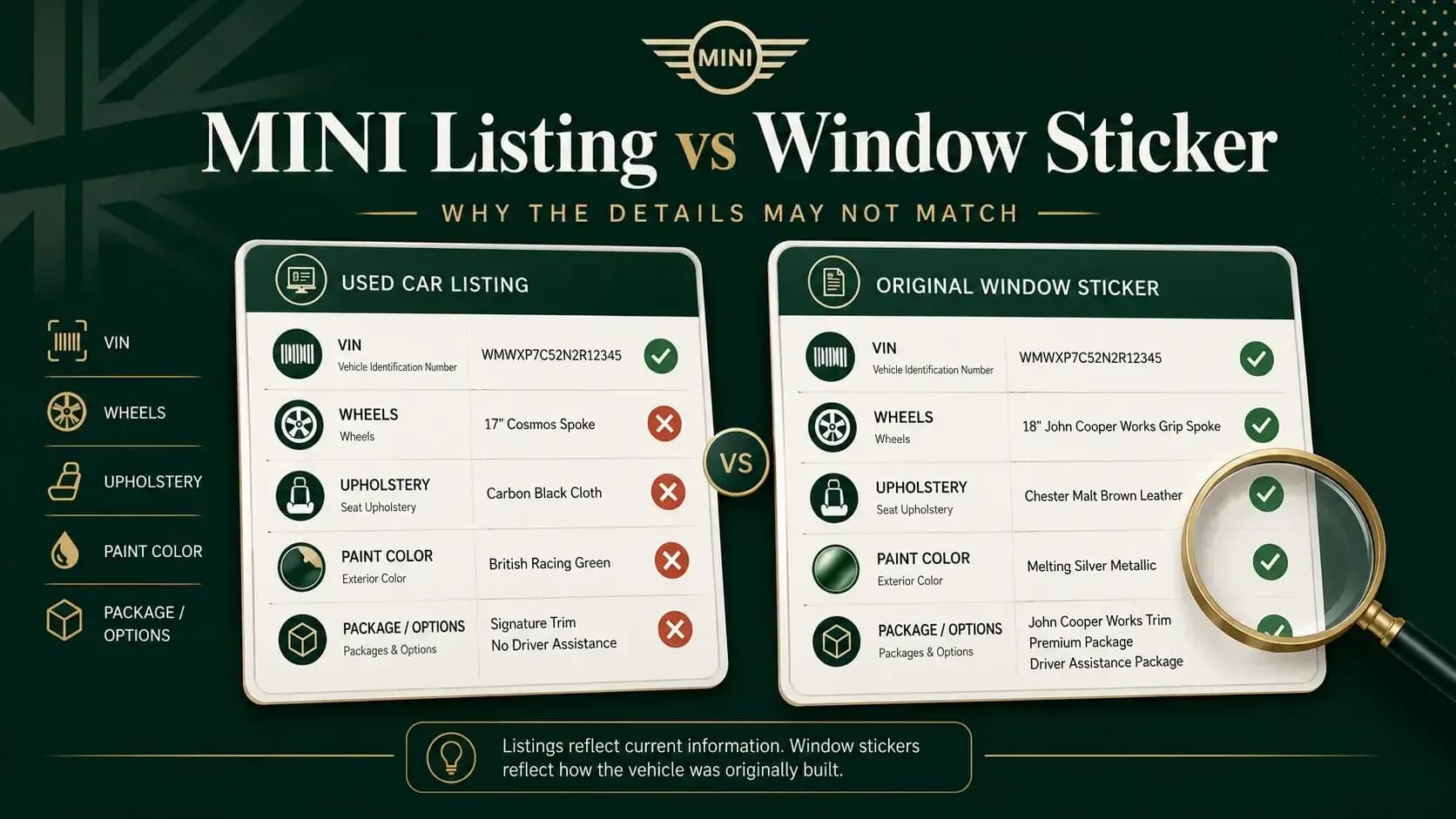
A used MINI listing may differ from the original window sticker because equipment was added, removed, replaced, or described incorrectly. The listing shows how the seller presents the car today, while the sticker records how MINI originally built and priced it.
That difference isn’t always alarming. Still, it deserves a closer look before you negotiate. Start by checking the original MINI window sticker, then compare it with the listing and the actual vehicle.
Key Takeaways
- The window sticker records the original factory build, not every later change.
- Listing errors often involve packages, upholstery, wheels, colors, and trim names.
- VIN, engine, transmission, and body-style conflicts require the most attention.
Why Can a Used MINI Listing and Window Sticker Differ?
A used car listing vs window sticker comparison often reveals small differences. Many have simple explanations, though some can affect value, originality, or the accuracy of the sale.
Here are six common reasons the two sources may not match:
The Listing Uses Generic Vehicle Data
Dealers often use inventory software that fills feature lists automatically. A template may assign navigation, leather seats, premium audio, or driver-assistance equipment to an entire trim, even when the specific MINI doesn’t have those features.
Equipment Was Added After Delivery
A dealer or previous owner may have installed wheels, stripes, mirror caps, roof accessories, lighting, or audio equipment. These additions can be real and useful, but they normally won’t appear as original factory options.
Original Parts Were Removed or Replaced
Factory wheels may be changed after damage, and seats or trim may be replaced as the car ages. The sticker can remain correct even when the current vehicle looks different because it records the original configuration.
Package Names Were Used Too Loosely
MINI package names vary by model year and can be confusing. A seller may call sporty-looking equipment a Sport Package, even when the factory sticker doesn’t list that package as part of the original build.
The Model or Trim Was Identified Incorrectly
A Cooper, Cooper S, Clubman, Countryman, Convertible, and JCW model can share familiar styling. A seller may choose the wrong trim from a menu or rely on badges that were added later.
The Listing Describes the Car’s Current Appearance
A wrapped roof, repainted panel, changed upholstery, or aftermarket wheels may alter how the car looks today. The listing may describe the current appearance, while the sticker reflects the vehicle’s original factory finish.
Which Mismatches Are Normal, and Which Need Attention?
Not every Monroney label mismatch should end a deal. Cosmetic changes are common on older MINIs. Conflicts involving the vehicle’s identity or mechanical configuration deserve far more care.
These four categories help separate ordinary changes from serious concerns:
Cosmetic Accessories Are Usually Easy to Explain
Stripes, mirror caps, floor mats, shift knobs, and decorative trim are frequently changed. Ask whether the original pieces are included, especially when originality matters, but don’t treat every cosmetic difference as a major warning.
Wheels and Audio Changes Need Inspection
Aftermarket wheels and sound systems are common, yet installation quality matters. Check tire fitment, warning lights, wiring, and whether factory pieces were cut or removed before assuming the modification adds value.
Mechanical Identity Conflicts Are More Serious
A manual-transmission sticker shouldn’t belong to a factory automatic car. The same applies to engine, drivetrain, body style, and VIN. These details define the vehicle rather than merely changing its appearance.
Factory Package Claims Need Proof
A seller may ask more because the MINI supposedly has a rare package. If that package isn’t shown on the sticker or supporting factory records, ask whether its components were added later.
How Should You Compare the Listing with the Window Sticker?
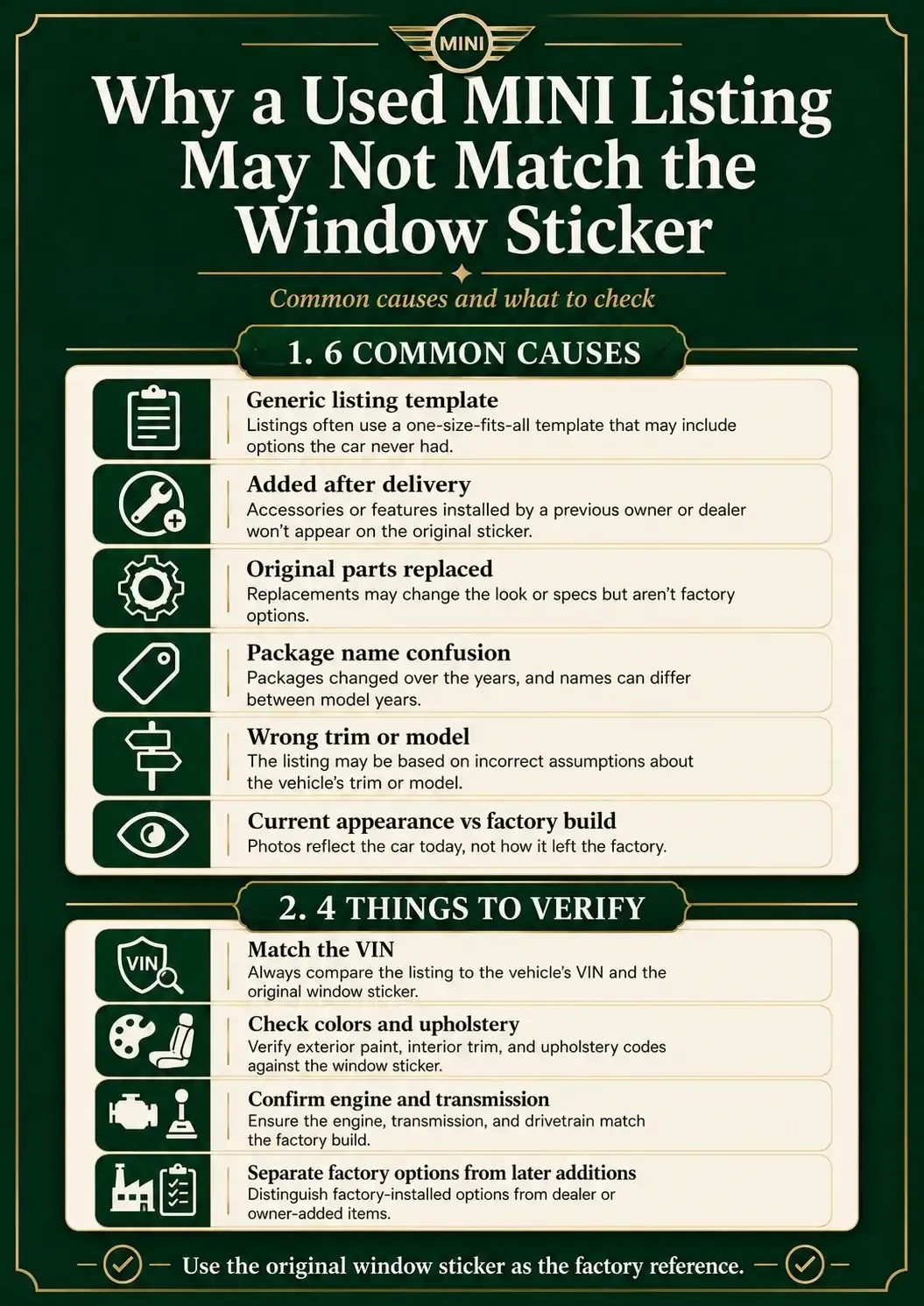
A proper comparison works best when you follow the same order every time. Start with identity, move through appearance and equipment, then review the seller’s pricing claims.
Use these six checks to keep the process simple.
Match the VIN First
Compare all 17 VIN characters on the sticker with the dashboard, door jamb, title, and registration. If the VIN differs, stop there because the sticker may belong to another vehicle.
Confirm the Model and Body Style
Check the year, model, trim, and body type shown on both sources. A Hardtop, Clubman, Countryman, and Convertible can carry very different equipment despite sharing familiar MINI design cues.
Compare Factory Colors and Upholstery
Review the exterior color, interior shade, material, and trim code. A difference may come from a repaint, wrap, replaced seat, or simple listing mistake rather than an incorrect factory record.
Check the Engine and Transmission
Compare the original powertrain with the vehicle and advertisement. This matters for performance, fuel economy, maintenance, parts, and resale, so don’t rely only on badges or seller-selected menu data.
Separate Standard Equipment from Options
A long feature list doesn’t mean every item increased the original price. Identify what came standard, then check the paid packages and individual options that made the specific MINI different.
Review Original Price Claims
A seller may mention a high original MSRP to justify the asking price. Confirm that the sticker’s packages, options, destination charge, and total price actually support the number being advertised.
For a deeper explanation of equipment categories, read factory-installed, dealer-installed, and aftermarket MINI options.
What Does the 2015 MINI Convertible Example Reveal?
The supplied 2015 MINI Cooper Convertible sticker shows how a short used-car advertisement could miss important details or describe them too loosely.
Its key factory information includes:
| Factory detail | Original sticker information |
|---|---|
| VIN | WMWZN3C53FT861789 |
| Exterior | Pepper White |
| Interior | Carbon Black SensaTec Leatherette, code 7KM |
| Engine | 1.6L I-4 16V DOHC |
| Transmission | Getrag six-speed manual |
| Base MSRP | $25,700 |
| Total vehicle price | $39,600 |
← Scroll horizontally to see more →
The sticker also lists the Highgate Package, Sport Package, Technology Package, MINI Connected packages, and John Cooper Works interior and exterior packages.
Four lessons stand out from this example.
“Black Leather” Would Be Inaccurate
The cabin may look like black leather in photos, but the sticker identifies Carbon Black SensaTec Leatherette. That distinction matters for care, buyer expectations, and an honest resale description.
“Base Convertible” Would Leave Out Too Much
The original build included several major packages and premium details. Describing it as a plain base Convertible would hide much of the equipment that raised its original price.
Appearance Alone Could Mislead Buyers
Chrome Line details, Pepper White interior surfaces, xenon headlights, power-folding mirrors, and a MINI Yours instrument panel all contributed to the original configuration. Some could later be removed or copied onto another car.
The Total Price Needs Context
The vehicle started with a $25,700 MSRP and reached $39,600 after packages, options, and shipping. The sticker explains that $13,900 difference instead of leaving buyers to accept a vague “fully loaded” claim.
What Should You Do When the Options Don’t Match?
A used car option mismatch doesn’t automatically prove that the seller is dishonest. It does mean you should pause, ask direct questions, and inspect the equipment before agreeing on a price.
These four actions keep the discussion calm and factual:
✓ Ask for a Clear Explanation
Point to the exact difference instead of making a broad accusation. Ask when the wheels, seats, stereo, trim, or other equipment changed and whether receipts or original parts are available.
✓ Inspect the Feature in Person
Photos can hide worn upholstery, missing controls, warning lights, or poor wiring. Test navigation, heated seats, audio, lights, power mirrors, and other claimed features rather than trusting the description alone.
✓ Check Supporting Factory Information
A build sheet may help confirm original equipment, package details, colors, engine, transmission, and trim. It can add useful context when the window sticker and current vehicle no longer look identical.
✓ Adjust the Deal or Walk Away
If a costly claimed package is absent, the asking price may need to change. If the conflict involves VIN, engine, title, or unexplained alterations, leaving may be the wiser choice.
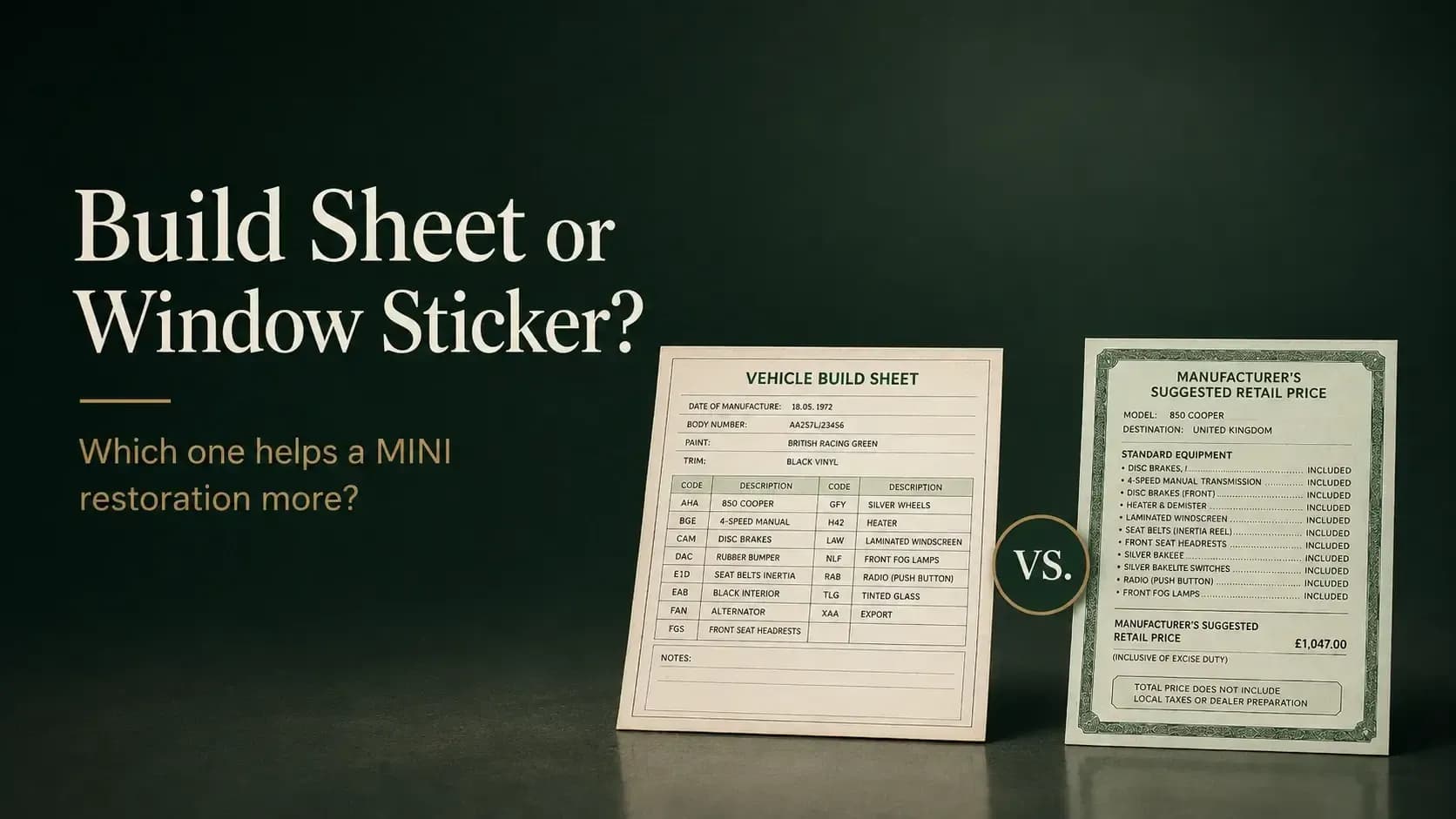
For restoration-related questions, see when to use a MINI build sheet or window sticker.
How Can a Mismatch Affect Price and Resale?
Factory documentation can support a MINI’s story, but value never comes from one document alone. The effect depends on what changed, why it changed, and how well the work was done.
These four factors matter most.
Factory Packages Can Support Value
A desirable original package may make the MINI easier to market. The window sticker helps confirm that the equipment belonged to the vehicle from new rather than being assembled from later parts.
Aftermarket Changes Can Help or Hurt
Good wheels, suspension, or audio may appeal to the right buyer. Poor fitment, rough wiring, or extreme styling can narrow the audience and reduce confidence in the car.
Missing Original Parts May Reduce Interest
Enthusiasts may expect the wheels, trim, or package features shown on the sticker. If those pieces are gone, replacement cost and lost originality may affect the offer.
Accurate Records Make Resale Easier
A seller who clearly separates factory equipment from later additions builds trust. Good documentation also makes the future listing easier to write and supports more precise conversations with buyers.
Compare the Factory Build with the MINI You See Today
A used car window sticker mismatch often has a simple explanation. The listing may use generic data, the MINI may carry later accessories, or some original equipment may have been replaced.
The important part is knowing which information describes the original factory build and which describes the car today. Match the VIN first, then check the colors, powertrain, packages, and major price claims.
When something doesn’t line up, ask. Inspect. Verify. That small amount of patience can protect your budget and help you describe the car accurately when it’s your turn to sell.
Before making your decision, check the original MINI window sticker and compare it with the listing.